
Food Delivery Packaging 101: Keeping Meals Fresh from Kitchen to Door
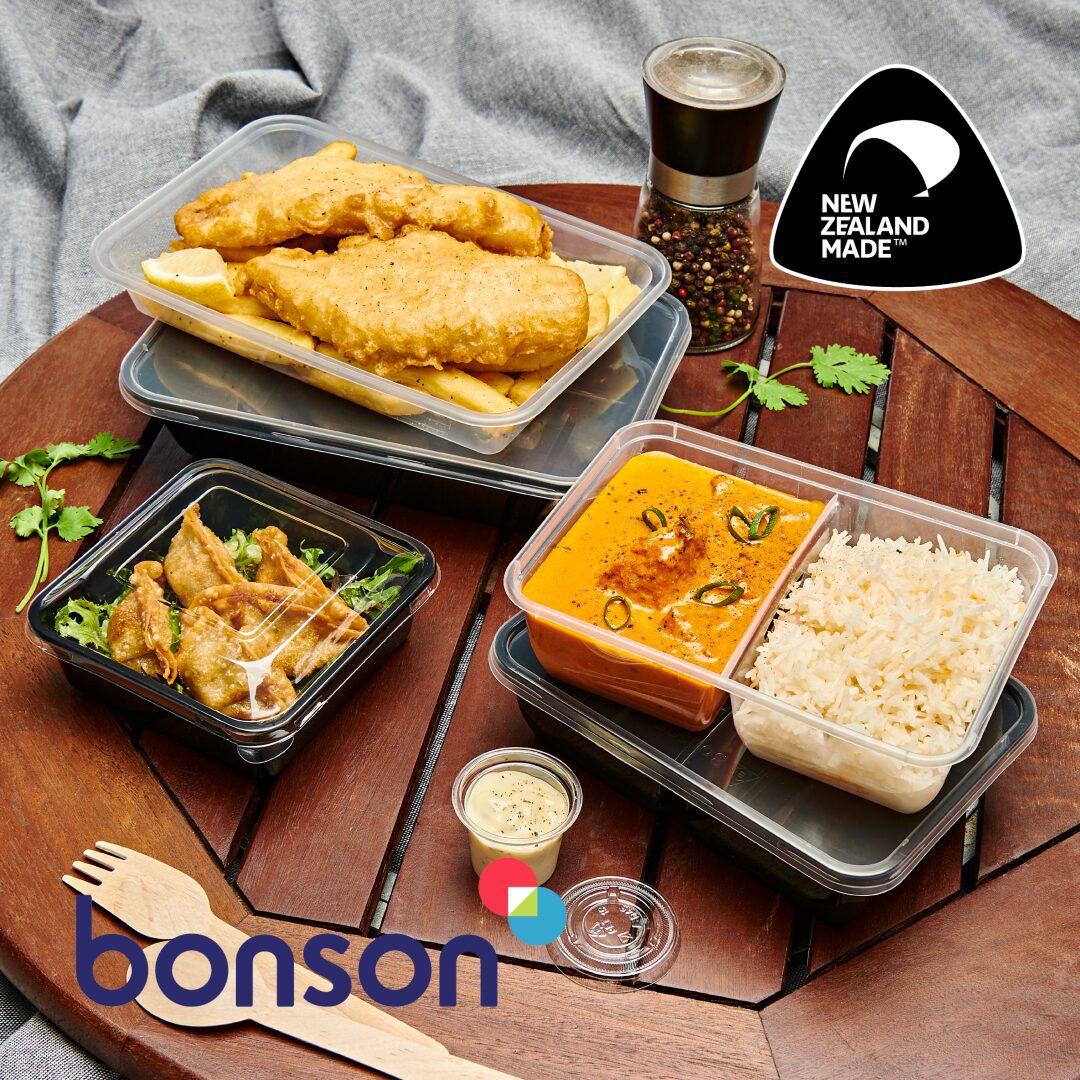
A dish that leaves your kitchen perfect can still arrive a mess. Between the pass and the customer’s door, food goes through vibration, temperature swings, stacking, tilting, and anywhere from ten minutes to an hour in a delivery bag. None of which is under your control – except the packaging you put around it.
For a lot of foodservice kitchens running delivery through Uber Eats, Menulog, or their own click-and-collect, packaging is quietly doing the heavy lifting.
Learn what actually matters, and where operators most often lose the fight against soggy chips, leaked sauce, and one-star reviews that have nothing to do with the food itself.
The core problem: delivery breaks the rules dine-in packaging follows
Dine-in and even standard takeaway packaging is built around a short window. Food goes from plate or box to mouth in minutes. Delivery stretches that window dramatically, and adds movement, tilting, and stacking the kitchen never sees. Four things go wrong repeatedly:
- Steam has nowhere to go, so it condenses back onto the food – this is the single biggest reason fries go limp, batter turns soft, and pizza bases go soggy.
- Heat bleeds out faster than expected, especially with thin single-wall containers or large surface-area trays.
- Liquids escape at the exact moment they shouldn’t – during the bag ride in the back of a car or on a bike rack.
- Different components fight each other – a sauce touching crumbed food, hot touching cold, wet touching dry; degrading texture well before the customer opens the bag.
Good delivery packaging isn’t about using a heavier box. It’s about solving these four problems for your specific menu.
Managing steam and moisture
This is where most quality complaints originate, and it’s solvable with format choices rather than premium materials:
- Vented lids let steam escape instead of raining back down onto fried or crumbed food. If you’re not currently using venting lids on chips, fries, or fried chicken. This is usually the simplest change you can make for the biggest improvement in maintaining quality.
- Fibre-based containers (kraft board, bagasse) absorb some ambient moisture rather than trapping it against the food the way a fully sealed plastic surface does – part of why bagasse performs well for hot chips and fried items specifically.
- Separate wet components where you can. A small side container for sauce or dressing, rather than pouring it directly onto the item, keeps texture intact until the customer is ready to eat. This is a much cheaper fix than redesigning your main container.
Holding temperature without overengineering it
Fully insulated packaging has its place, but it’s usually overkill (and an unnecessary cost) for most short-haul urban delivery. What matters more consistently:
- Snug-fitting lids with a genuine seal, not just a lid that sits on top. Gaps are where heat escapes fastest.
- Container size matched to portion. Excess airspace above the food is wasted insulation. A container that’s noticeably bigger than the meal loses heat faster than one that’s a closer fit.
- Double-walled or corrugated fibre for genuinely long-haul or rural deliveries, where the extra material cost is justified by the extended time in transit.
Leak-proofing is a structural problem, not a lid problem
Sauces, curries, and soups fail in delivery for a predictable reason: the lid was tested sitting flat on a bench, not tilted at 30 degrees in a bag on a bike over a pothole. A few things matter more than lid tightness alone:
- Container depth relative to fill line – under-filling slightly gives liquid somewhere to move without reaching the seal.
- Rim design – a properly engineered locking or crimped rim outperforms a simple push-fit lid every time liquid is involved.
- Bagging orientation cues – a small “this way up” indication or a naturally stable base shape reduces the chance of tipping inside a delivery bag, which is a packaging design decision as much as a driver-behaviour one.
Getting the sustainability angle right without overclaiming
Foodservice delivery customers increasingly notice packaging waste, but the honest picture is nuanced, and it’s worth being accurate rather than making broad “eco-friendly” claims that don’t hold up. A few things genuinely help:
- Match material to what’s collected locally. Kerbside recycling acceptance for things like PLA and some compostables varies significantly by council, so a compostable claim is only as good as whether your customers’ bins accept it.
- rPET and PP containers with clear recycling numbering are more consistently recyclable through standard kerbside streams across most councils than compostable alternatives, despite compostables often reading as “greener” to shoppers.
- Right-sizing packaging reduces material use more reliably than material choice alone. A container that’s the correct size for the portion is a straightforward, defensible sustainability improvement that doesn’t depend on customer behaviour after delivery.
- Returnable systems, like RePlay™ Returnables, remove the single-use question altogether for repeat-customer models such as office catering or subscription meal delivery. This option may be worth considering if your delivery volume comes from a smaller number of regular customers rather than one-off orders.
A quick pre-launch checklist
Before rolling out or refreshing a delivery packaging format, it’s worth testing against the actual conditions rather than a still bench photo:
- Pack a full order, then tilt the bag 45 degrees and hold it there for 30 seconds. Does anything leak or shift?
- Leave the packed order for the length of your average delivery time before opening. How does texture hold up?
- Stack two or three orders as a driver would in a bag. Does the bottom container survive the weight?
- Check the lid seal by shaking gently, not just placing it down. Driving conditions are rougher than a kitchen pass.
Delivery packaging succeeds or fails on details that never show up in a product spec sheet – vent placement, fill line, rim tightness – but they’re the difference between a five-star delivery experience and a customer blaming the kitchen for something the box actually caused.
Not sure which format suits your delivery menu? Get in touch with the Bonson NZ team. We can talk through your dish types, delivery radius, and the right container, lid, and material combination for keeping food in good order, from kitchen to door.
