
Why Reusable Food Containers Make Better Business Sense for Restaurants & Food Retailers
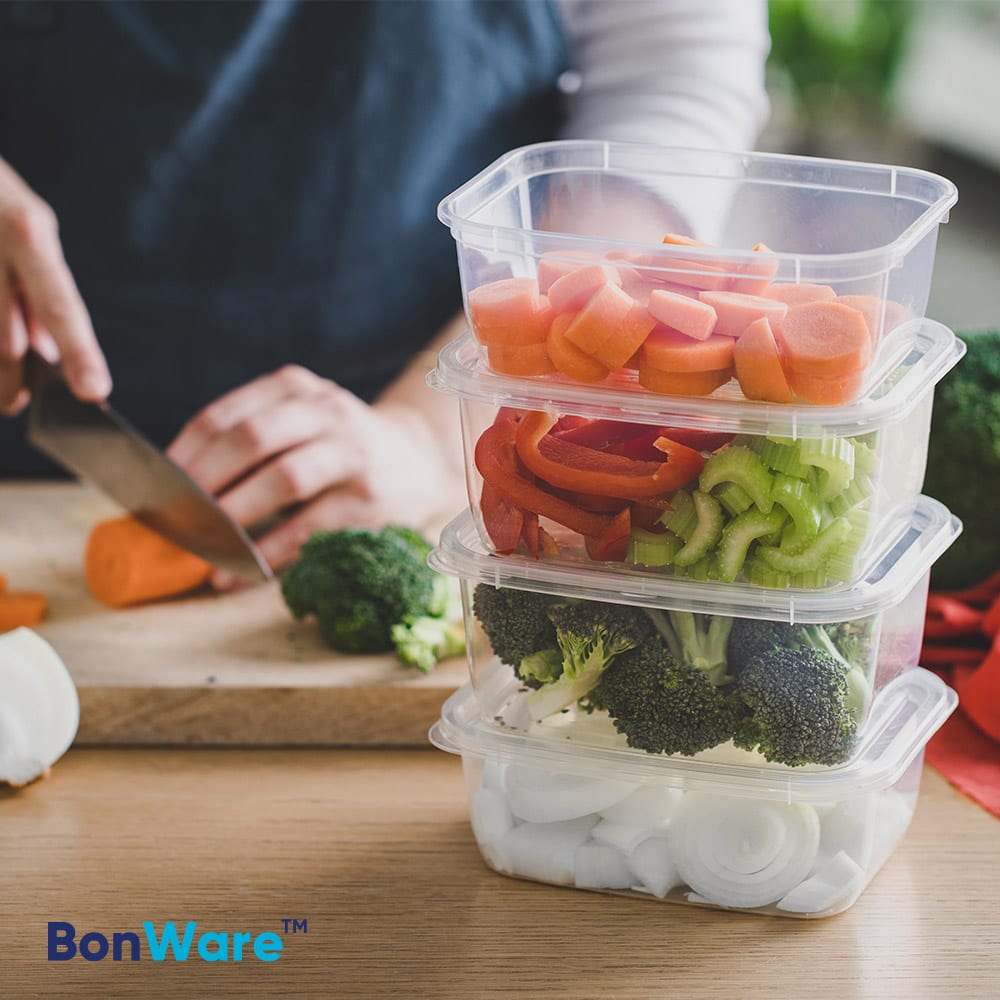
For restaurants, cafés, caterers, bakeries, commercial kitchens and retail food businesses, food storage is about much more than keeping ingredients organised.
The containers used for food preparation, ingredient storage and back-of-house operations can affect food safety, operational efficiency, waste, compliance and ultimately the bottom line.
While single-use plastic containers can appear inexpensive at the time of purchase, repeatedly replacing them can quickly add up. This is why more food businesses should consider switching appropriate back-of-house applications to Bonware reusable food preparation and storage containers from Bonson Packaging.
Food Safety and Compliance Should Come First
Australian food businesses are expected to maintain food premises, equipment and food-contact surfaces in a condition that allows them to be effectively cleaned and sanitised.
Food storage containers can become a potential food-safety issue when they are damaged, cracked, heavily scratched, warped or otherwise difficult to clean effectively. Containers originally intended for single-use applications may not be designed for repeated washing, sanitising and ongoing commercial kitchen use.
Cracked, brittle or repeatedly stressed disposable containers don’t just create a hygiene risk, they can also develop sharp or jagged edges over time, creating an unnecessary handling hazard for kitchen staff. Purpose-built reusable containers are designed to withstand repeated handling without that same risk of chipping or cracking.
Reusing unsuitable or deteriorated single-use containers can therefore create an unnecessary food-safety, compliance and workplace-safety risk.
A standardised reusable container system also makes food-safety documentation more straightforward. Where every container in circulation is a known, purpose-built, food-grade product, it’s easier to demonstrate consistent food-contact standards during HACCP reviews or third-party audits, compared with an assortment of repurposed containers of unknown history and condition.
Rather than continually trying to extend the life of disposable packaging, businesses can use purpose-designed reusable containers for applications where containers are expected to be washed, sanitised and returned to service.
Designed to Be Used Again and Again
The Bonware reusable range is designed specifically for repeated food preparation and storage applications.
Compared with disposable containers that may need frequent replacement, Bonware reusable containers can provide more than 10 times the usable life of typical single-use alternatives, depending on handling, application and cleaning practices.
That difference can have a significant impact across a busy commercial kitchen.
Instead of constantly opening new cartons of disposable containers for back-of-house food preparation and storage, staff can wash, sanitise and reuse Bonware containers. One reusable container can replace many disposable containers over its working life. That means fewer containers purchased, fewer containers thrown away and potentially a substantially lower cost per use.
Look Beyond the Purchase Price – Calculate Cost Per Use
A single-use container will normally have a lower upfront price than a commercial reusable container. But the initial purchase price doesn’t tell the whole story.
Consider a simple example.
If a disposable container costs $0.55 and is effectively used once, its packaging cost is approximately .55 cents per use.
If a reusable container costs $1.15 but achieves 20 uses, its container cost falls to approximately:
$1.15 ÷ 20 uses = $0.06 cents per use
At 50 uses:
$0.60 ÷ 50 uses = just over $0.02 cents per use
[NOTE: Prices above based on RRP 1000ml Freezer Grade Rectangle container, when compared with 1000ml Bonware Reusable container.]
The actual economics will vary according to the container, application, washing costs, labour, loss rates and useful life, but the principle remains the same:
Don’t simply compare the price of one container. Compare the cost of every use you get from it.
For a business using hundreds or thousands of containers every week, the potential annual savings can become substantial.
Beyond Packaging Waste: Reduced Food Waste, Too
The savings don’t stop at the container itself. Well-made reusable containers typically hold a tighter, more reliable seal than disposable alternatives, which means less freezer burn, less moisture loss and less spoilage for prepped ingredients, sauces and stock sitting in the fridge or freezer.
That’s a food-cost saving that sits alongside the container-cost saving, and for many kitchens the value of food not wasted can outweigh the value of the container itself. A container that keeps ingredients fresher for longer is doing double duty: protecting the product and protecting the bottom line.
Reduce Packaging Waste
Moving appropriate back-of-house applications from disposable to reusable containers can also dramatically reduce the volume of plastic being discarded.
If one reusable container replaces more than ten single-use containers during its working life, every reusable container introduced into the operation has the potential to eliminate multiple disposable containers from the waste stream.
For larger restaurants, food manufacturers, caterers and central kitchens, that reduction can translate into thousands of fewer disposable containers being consumed every year.
This can help businesses:
- Reduce single-use plastic consumption
- Reduce packaging waste
- Reduce the frequency of replenishment
- Lower waste-disposal volumes
- Support internal sustainability initiatives
- Demonstrate practical environmental improvements to customers and stakeholders
Importantly, sustainability and cost reduction don’t have to be competing objectives. A well-managed reusable system can deliver both.
Better Organisation in the Commercial Kitchen
Reusable food-preparation containers can also help create a more structured kitchen environment.
A standardised container system can make it easier to organise:
Prepared ingredients • sauces • marinades • chopped vegetables • meat preparation • bakery ingredients • pre-portioned foods • garnishes • bulk ingredients • refrigerated products
Using consistent, purpose-designed containers can also improve stacking, storage utilisation and stock identification compared with accumulating an assortment of repurposed disposable containers. Containers built to stack reliably and move cleanly between fridge, freezer and prep bench reduce spills, wasted bench space and the time staff spend rearranging mismatched containers.
There’s a labour benefit here too. Less time spent unboxing new cartons of disposable stock, breaking down cardboard, or hunting through mixed sizes for the right fit means kitchen teams can move faster during service and prep. Fewer disposable SKUs also means less dry-storage space taken up by container stock, less frequent reordering and lower risk of running out mid-service.
For busy kitchens, these seemingly small improvements can add up to meaningfully more efficient day-to-day operations.
Stop Treating Disposable Packaging as Permanent Equipment
Single-use packaging has an important role in foodservice, particularly for takeaway, delivery and customer-facing applications.
But that doesn’t mean it should automatically be used for every application inside the kitchen.
There is a clear distinction between packaging designed to carry food to a customer and equipment intended to be repeatedly used for food preparation and storage.
Where a container is going to be repeatedly washed, sanitised, stacked, refrigerated and returned to service, a purpose-designed reusable solution may provide better long-term value.
The Bonware Advantage
Bonson Packaging’s Bonware reusable food preparation and storage containers provide food businesses with an alternative to continually replacing disposable containers in suitable back-of-house applications.
The potential advantages include:
- More than 10x the usable life of typical single-use containers
- Lower potential cost per use
- Reduced food waste through better seal performance
- Reduced reliance on disposable packaging
- Less plastic entering the waste stream
- Designed for repeated food preparation and storage applications
- Improved kitchen organisation, stacking and storage efficiency
- Less staff time spent on unboxing, sorting and reordering
- Reduced handling risk compared with degraded disposable containers
- A practical approach to supporting food-safety procedures and audit readiness
- Potential long-term purchasing savings
What Could Your Business Save?
The biggest opportunity becomes visible when businesses stop looking at the carton price and start looking at their annual container consumption.
Ask three questions:
- How many disposable containers are we currently using for internal food preparation and storage?
- How much are we spending on them every year?
- How many of those uses could be converted to a reusable system?
For a high-volume food operation, changing even part of its container usage from disposable to reusable could represent a significant annual saving.
Make Reuse Part of Your Food-Storage Strategy
Single-use packaging will continue to have an important place in foodservice. But for repeated meal preparation, ingredient handling and back-of-house food storage, businesses should consider whether continually buying disposable containers is really the most economical or appropriate solution.
Bonware reusable containers are designed to be used, cleaned and used again; delivering more uses from every container and potentially reducing operating costs, food waste and plastic waste alike.
Want to See What Your Business Could Save?
Bonson Packaging can review your current food preparation and storage container usage and compare it with suitable Bonware reusable alternatives.
By looking at current container costs, weekly consumption and expected reusable life, we can help identify applications where switching to reusable containers could deliver the greatest operational and financial benefit.
Bonson Packaging | Bonware Reusable Food Preparation & Storage Solutions
Reuse more. Replace less. Reduce your cost per use.
